
Blog · 15 December 2025 · Coaching, CrossFit, Health, Mental health, Resilience, Strength, Women's health
Not All Injuries Are Physical
By Sian Edwards
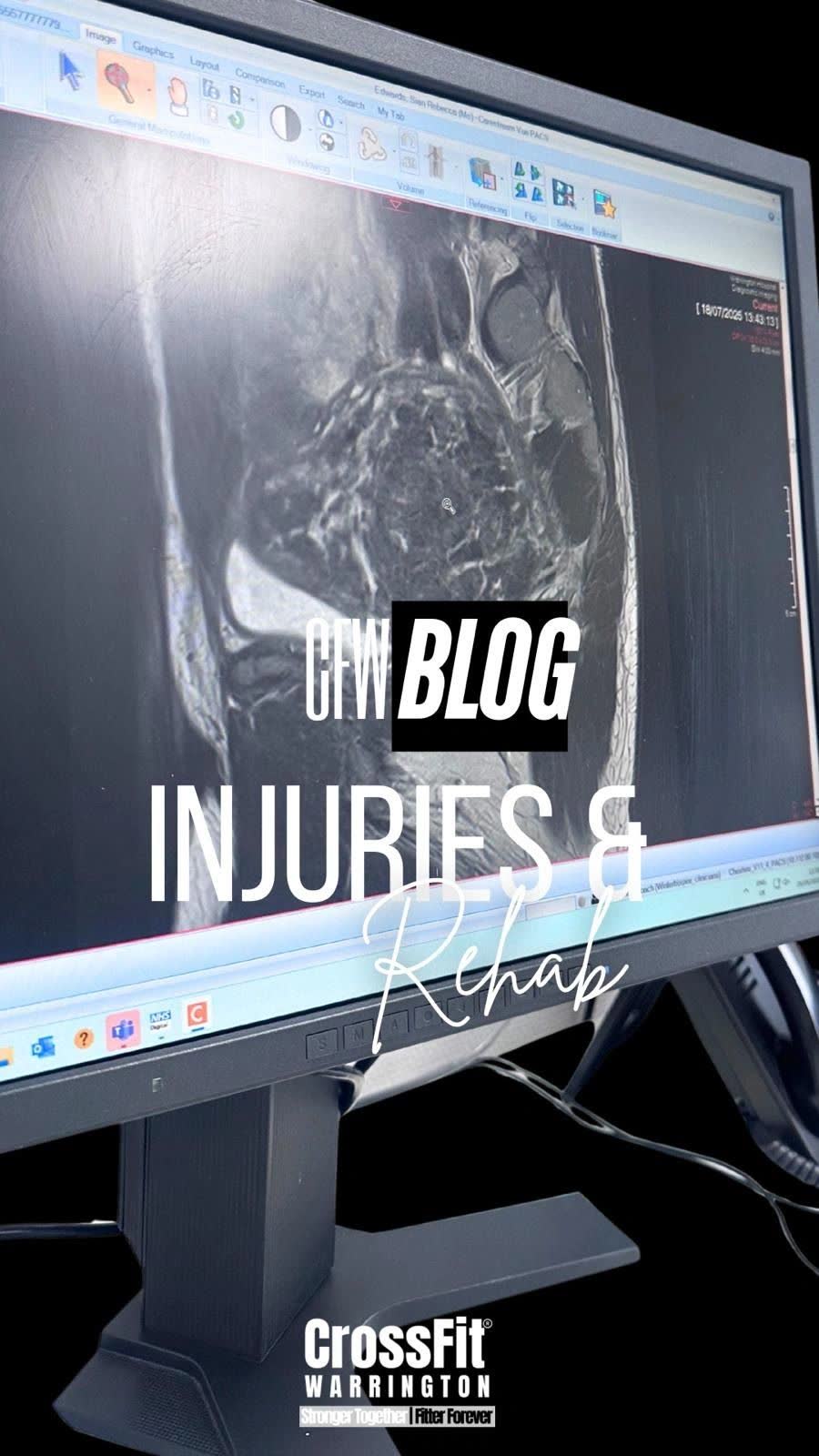
When we talk about injuries in CrossFit, most people immediately think of something obvious — a shoulder, a knee, a back. Something you can point at. Something you can see.
But not all injuries are visible. And not all of them are physical.
Sometimes the hardest injury to come back from is mental.
Time away from training — whether through injury, surgery, burnout, or life simply happening — can leave you carrying more than you realise. Walking back into the gym after time away can feel daunting. Confidence may be shaken. Your body might feel unfamiliar. Your head might be louder than your muscles.
That matters.
Coming Back After Time Away
Returning doesn’t always mean picking up where you left off. Sometimes it means meeting yourself where you are now — not where you were before.
That’s something CrossFit Warrington owner Sian knows first-hand.
Following recent surgery — a full hysterectomy and fibroid removal — Sian’s return to training hasn’t been about chasing numbers or proving anything. As a quarterfinals-level CrossFit Masters athlete, she understands intensity, discipline, and commitment. But she also understands that recovery, patience, and listening to your body are part of being an athlete too.
“There’s a difference between being capable and being ready,” she says. “And learning to respect that has been just as challenging mentally as it has been physically.”
The Less Obvious Injuries
Surgery leaves scars you can see — but it also leaves ones you can’t. Fatigue, fear of re-injury, frustration, and loss of confidence can creep in quietly. These are the injuries that don’t show up on a scan but still affect how you move, train, and feel.
Coming back as a Masters athlete adds another layer. Your body needs more recovery. Your mindset needs more honesty. And that’s okay.
Why Coaches Ask, “How Are You Today?”
When a coach asks how you are, it’s not small talk. It’s not judgement.
It’s how we decide whether today is a day to push, a day to scale, or a day to simply move and feel better.
If you’re having a tough day — physically or mentally — the goal isn’t to beat yourself up even more. Training should support you, not punish you.
Scaling intensity isn’t weakness. It’s intelligent coaching and long-term thinking.
Everyone’s Journey Looks Different
In any class, you’ll see people doing different weights, different movements, different versions of the workout — and that’s exactly how it should be.
What you see has been agreed between the athlete and the coach. Everyone is working to their needs, their recovery, and their goals for that day.
Someone lifting lighter isn’t doing less.
Someone moving slower isn’t trying less.
Someone scaling is still working hard — I promise.
A Final Thought
You don’t owe anyone an explanation.
You don’t need to rush your comeback.
You don’t have to be at your best every day.
Just showing up is enough.
At CrossFit Warrington, we train bodies — but we support people. And sometimes, the most important work happens quietly, one careful step at a time.